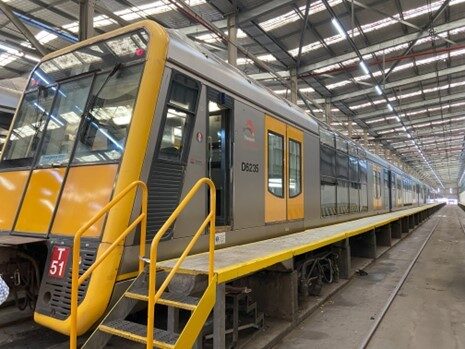
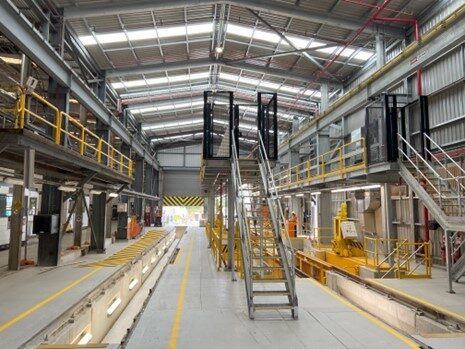
Mortdale Maintenance Centre Capacity and Logistic Modelling for Sydney Trains
SYSTRA ANZ and Sydney Trains developed a digital replica of the maintenance activities at Mortdale Maintenance Centre (MMC) in Sydney. By employing advanced modelling techniques and incorporating real-world data, this initiative brought a new level of sophistication to transport technology in Australia. The simulation provided a visual representation of shunting and maintenance operations within the MMC, leading to the identification of issues of staffing and maintenance schedule. This modelling approach, coupled with performance optimisation, ultimately enhanced MMC's productivity by 30%, effectively shaping efficient operational and financial planning. These advantages align with Sydney Trains' "More Trains More Services" vision, facilitating the transition of about 20% more electronic trains and promoting a dependable transportation system.
The AnyLogic, a multi-method simulation software, and VBA Macros played an important role in this analysis. By delving into the analysis, it was clear that the model's adaptability allowed the modelling techniques to transition across different locations. This adaptability facilitated an evaluation of various aspects, including capacity, resource allocation, and operational efficiency. The ability to customise parameters and specific characteristics of each maintenance centre further enriched the analysis, providing insights and aiding in effective decision-making processes. This transferability potential greatly expanded the application of the analysis methodology to improve not only efficiency and safety but also the overall performance of maintenance centres across a range of locations.
This innovative approach enhanced operational efficiency and brought sustainable benefits to society. By optimising the use of existing maintenance centres, the need for constructing new facilities was minimised, resulting in a reduced environmental impact. Improved maintenance efficiency subsequently lowered the risk of train failures, contributing to more reliable train services. Furthermore the initiative improved train service reliability, a catalyst to encourage people using public transport instead of private vehicles, participating to the broader goal of creating a sustainable future.